Hazardous Manual Tasks
Most musculoskeletal injuries are not single-event lifts — they're cumulative damage from force + posture + repetition + duration. Redesign the task or the load, don't ask the worker to overcome it through training or willpower.
- Reg 60 definition: tasks involving sustained/repetitive force, awkward/sustained posture, repetitive movement, vibration, or unstable/heavy loads.
- Apply the hierarchy: eliminate manual handling → mechanical aids → workplace redesign → admin (last) → PPE (limited).
- Technique training alone is ineffective — design changes do the work.
- For brick / lintel / plasterboard / formwork: mechanical aids first; reduce load size next; team-handling third.
1. What counts (Reg 60)
A hazardous manual task is any task requiring lifting, lowering, pushing, pulling, carrying, holding or restraining a person, animal, or thing that involves one or more of:
- Repetitive or sustained force (gripping bricks, pushing trolleys).
- High or sudden force (lifting heavy loads; unexpected load shifts).
- Repetitive movement (conveyor packing, keyboard, hammering).
- Sustained or awkward posture (kneeling on concrete, overhead work, trunk twist).
- Exposure to vibration (whole-body from vehicles; hand-arm from power tools).
Plus environment (heat, slippery floor, lighting, confined space) and psychosocial factors (time pressure, low autonomy).
These contribute to musculoskeletal disorders (MSDs) — sprains, strains, back injuries, joint degeneration, nerve compression.
2. The four risk factors
 Figure 1 — Neutral posture as the reference frame: spine roughly straight, shoulders relaxed, upper arms close to body, elbows ~ 90°, wrists straight. Task design should keep the worker close to this baseline.
- Force — magnitude, frequency, application speed.
- Posture — extreme angles, bending > 20°, twisting, asymmetric.
- Movement — repetitive actions > 2/min over > 2 h cumulative or > 30 min continuous.
- Duration — > 2 h/day or continuous > 30 min increases all the above. Micro-breaks help.
3. Examples of risk factors at work
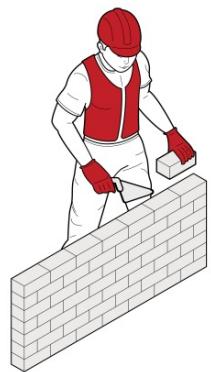 Figure 2 — Repetitive grip force: bricklaying. Each pickup is small; cumulative effect over a shift is the injury.
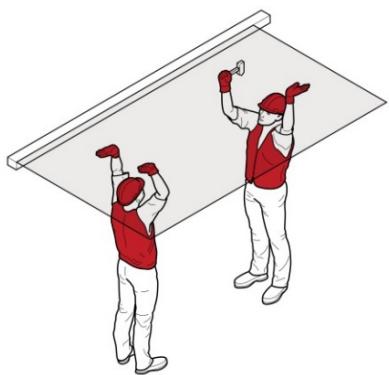 Figure 3 — Sustained posture: holding plasterboard overhead while fastening. The longer it's held, the worse it gets.
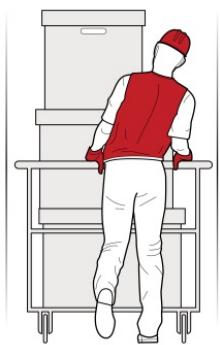 Figure 4 — Awkward posture: trunk twist while pushing. Combine that with the load and you have a textbook back injury.
4. Hierarchy applied to manual handling
Don't start with technique training. Start with elimination.
| Level | Examples |
|---|---|
| 1. Eliminate | Don't move it: deliver to point-of-use, automate, robotic handling. |
| 2. Substitute / Isolate / Engineer | Lighter materials; smaller pack sizes; mechanical aids (trolleys, hoists, vacuum lifters, conveyors, jib cranes); adjust working heights; vibration-damped tools. |
| 3. Administrative | Rotation between high/low-risk tasks; team-handling procedure; rest-breaks; supervision. |
| 4. PPE | Heat-resistant gloves; shock-absorbent shoes for hard surfaces. Limited role. |
Technique-only training fails unless paired with redesign.
5. Mechanical aids
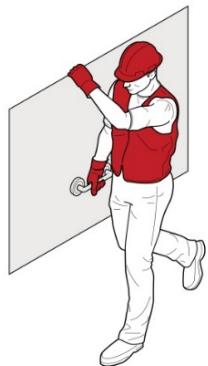 Figure 5 — Vacuum / suction lift for sheet materials. Reduces grip force and awkward posture in one step.
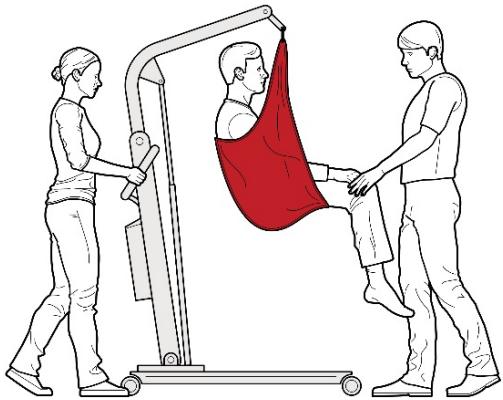 Figure 6 — Mechanical lifter: high-value intervention for repeated heavy-load handling.
| Aid | Application |
|---|---|
| Trolleys / pallet trucks | Reduce push/pull force; well-maintained wheels critical. |
| Overhead / jib / gantry cranes | Steel lintels, precast beams, plant. |
| Vacuum / suction lifters | Plasterboard, glass, sheet metal — reduce grip + posture risk. |
| Conveyors | Continuous handling: bricks, tiles, components. |
| Lift tables | Height adjustment for loading/unloading. |
| Articulating arms | Heavy hand tools (grinders, drills) suspended to counter fatigue. |
Aids that aren't matched to the task or kept maintained create new hazards. Train workers; service the equipment.
6. Workplace redesign
- Working heights: brick stacks, scaffold heights, material storage at waist-to-shoulder (optimal force range).
- Load weight / dimensions: pallets of bricks < 25 kg per bundle; formwork panels with handles for two-person handling.
- Reach distances: materials within natural reach. Avoid double-handling (pile → scaffold → wall = three lifts you only need to do once if delivered correctly).
- Layout: straight flow paths; minimise twisting / asymmetric postures during placement.
- Floor surfaces: even, non-slip; minimise uneven terrain during pours / excavation work.
- Workspace: room for team handling; safe maneuverability.
7. Construction-relevant examples
| Task | Risk | Better |
|---|---|---|
| Brick handling | Repetitive grip; bend/twist | Conveyor / pallet truck; smaller bundles; team-handling with role assignment |
| Roof tiles | High repetition; sustained sloped posture | Conveyor; stage at working height; rotation |
| Lintels / beams | High force; awkward lift | Overhead crane / mechanical hoist; redesigned delivery |
| Plasterboard (gyprock) | Sustained overhead posture | Mechanical lifter / prop supports; point-and-shoot fastener |
| Concrete pour | Sustained vibration; repetitive shovel | Power vibrator; mechanical screed; rest breaks |
| Formwork assembly | High force striking; awkward postures | Pre-fab; vibration-damped striking tools; mechanical fastening |
8. Assessment tools
- Observation — real-time analysis of posture, force, movement, duration.
- Worker consultation — discomfort surveys, near-miss reports.
- Code's Appendix F worksheet — systematic factor evaluation.
- REBA / RULA / PATH — formal ergonomic tools (Appendix G refs).
Skip formal assessment only when the hazard is well-understood and an effective control is already established.
9. Training, consultation, records
Training (per Reg 39)
- Hazardous manual task risk identification.
- Worker's specific role-related risks.
- Use of mechanical aids and equipment.
- Safe work procedures.
- Reporting maintenance / design defects.
Training does not substitute for redesign. It supports controls; it doesn't replace them.
Consultation — workers and HSRs about the tasks they do. They know which tasks hurt.
Records
- Risk assessments, control measures, review dates.
- Training records: date, topic, trainer, attendees.
- Incident reports + MSD trend by body region (wrist, back, shoulder).
10. Common pitfalls / quick wins
Do
- Reduce load weights by repackaging — smaller brick bundles, half-length tiles, lighter formwork panels.
- Stage materials at working height — eliminate stoop-and-reach.
- Add handles / handholds to difficult loads.
- Introduce micro-breaks in high-repetition tasks.
- Rotate workers across different task types.
- Improve floor surfaces and lighting.
- Procure pre-fabricated components — reduce on-site assembly demands.
- Encourage early discomfort reporting; treat it as a free risk indicator.
Don't
- Run "manual handling training" as the only intervention — that's a regulator red flag.
- Introduce a mechanical aid without worker training and acceptance.
- Ignore psychosocial factors — time pressure and understaffing override safe methods.
- Use team handling as a permanent substitute for mechanical solutions.
- Let trolley wheels degrade — performance drops and force rises invisibly.
- Treat MSD as personal weakness; treat it as a system signal.
11. Cross-references
- See also: managing_risks_of_plant (mechanical aids classification), managing_noise_and_preventing_hearing_loss (vibration is closely related)
- Foundations: risk_management_process, whs_consultation_cooperation_coordination
- Glossary (MSD, Reg 60): glossary_and_key_concepts
Source: hazardous_manual_tasks.md (Safe Work Australia, model Code of Practice, CC-BY-NC 4.0). Edition: October 2018. Last verified against SWA: 2026-04-27.